
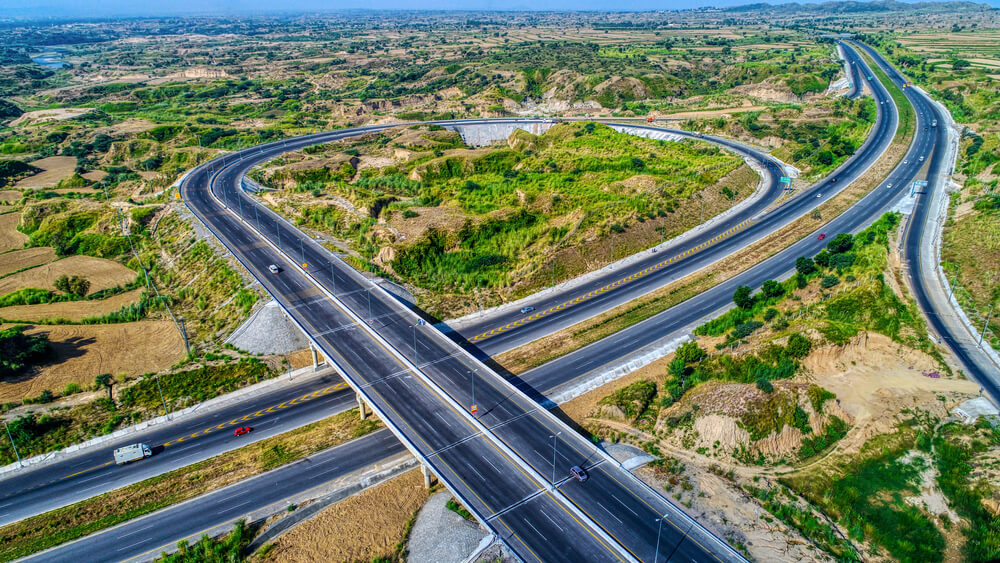
Major infrastructure projects are not only engineering challenges but also tests of legal and contractual risk management. Pakistan’s M-1 Peshawar–Islamabad Motorway stands as one of the most significant examples of how a complex construction dispute evolved into a landmark international investment arbitration case. Although the project became the subject of years of litigation, the motorway was successfully completed, and Pakistan ultimately secured a complete legal victory.
Project Background
In 1992, the Government of Pakistan approved the construction of the M-1 Motorway linking Islamabad with Peshawar in the country’s northwest. The project was financed through a combination of public funding (60%) and loans from international financial institutions (40%), including the Asian Development Bank (ADB), the World Bank, the Islamic Development Bank (IsDB), and the Japan Bank for International Cooperation (JBIC). From its inception, the motorway was designed as a toll road.
The project covered 155 kilometers and included 14 interchanges and three major bridges crossing the Kabul, Haro, and Indus rivers.
Construction Difficulties
In 1993, Turkish contractor Bayindir was awarded the main construction contract. An advance payment of US$159 million, representing 30% of the contract value, was secured by bank guarantees issued by a consortium of Turkish banks.
Construction, however, progressed significantly behind schedule. Following a series of disputes between the parties, the contract was renegotiated in 1997 with revised completion milestones. The final completion date was set for December 31, 2002, while two priority sections were required to be completed by March 23, 2001.
Bayindir failed to meet these obligations. On April 23, 2001, Pakistan’s National Highway Authority (NHA) terminated the contract and formally ordered the contractor to vacate the construction site. The Frontier Works Organization (FWO), Pakistan’s military engineering organization, took control of the project site, and Bayindir personnel were removed.
NHA subsequently demanded payment under the contractor’s bank guarantees, valued at approximately US$100 million.
The US$496 Million Arbitration Claim
In 2002, Bayindir initiated arbitration proceedings before the International Centre for Settlement of Investment Disputes (ICSID), claiming US$496.6 million in damages.
The claims included:
- US$167 million for lost profits;
- US$150 million for reputational damage;
- US$62 million for unpaid completed works;
- US$43 million for seized equipment;
- additional financial claims.
Bayindir argued that Pakistan had violated the Turkey–Pakistan Bilateral Investment Treaty by failing to provide fair and equitable treatment, discriminating in favor of domestic contractors, and effectively expropriating its investment.
Construction Continued Despite the Dispute
While arbitration proceedings were underway, Pakistan proceeded with the project. In December 2002, the Pakistan Motorway Contractors Joint Venture (PMC JV), a consortium of domestic contractors, was appointed to complete the remaining works. The motorway was successfully completed, and on October 30, 2007, President Pervez Musharraf officially inaugurated the final Burhan–Peshawar section. The total construction cost amounted to approximately PKR 16 billion (around US$200 million at the prevailing exchange rate). Meanwhile, the arbitration proceedings continued in Geneva.
Pakistan’s Complete Victory
On August 27, 2009, the ICSID Tribunal rendered its final award in favor of Pakistan.
The Tribunal concluded that:
- appointing a domestic contractor after contract termination did not constitute discrimination;
- NHA had acted lawfully, fairly, and in good faith;
- the contract termination did not amount to unlawful expropriation.
All of Bayindir’s claims were dismissed. Furthermore, the Tribunal confirmed Pakistan’s right to recover approximately US$96 million under the bank guarantees issued by the Turkish banking consortium. The decision became one of Pakistan’s most significant victories in international investment arbitration and established an important precedent: failure to perform a construction contract cannot automatically be transformed into an international investment treaty violation.
The Motorway Today
Today, the M-1 Motorway is fully operational and serves as one of Pakistan’s major toll highways. In January 2025, NHA increased toll rates for the third time within six months, raising the passenger vehicle toll to PKR 500 (approximately US$1.80).The government aims to generate PKR 102 billion in toll revenue during the fiscal year. Interestingly, toll collection is managed by the Frontier Works Organization—the same organization that assumed control of the construction site following Bayindir’s removal in 2001.
Conclusion
The M-1 Motorway case demonstrates that successful infrastructure delivery depends not only on engineering excellence but also on robust contractual governance and legal preparedness. Pakistan not only completed a nationally significant infrastructure asset but also successfully defended its position in one of the country’s most important international investment arbitration cases. For governments implementing large-scale infrastructure projects, the case serves as a valuable reminder that disputes with international contractors may evolve beyond contractual disagreements into investment treaty arbitration, making effective legal strategy an essential component of project success.